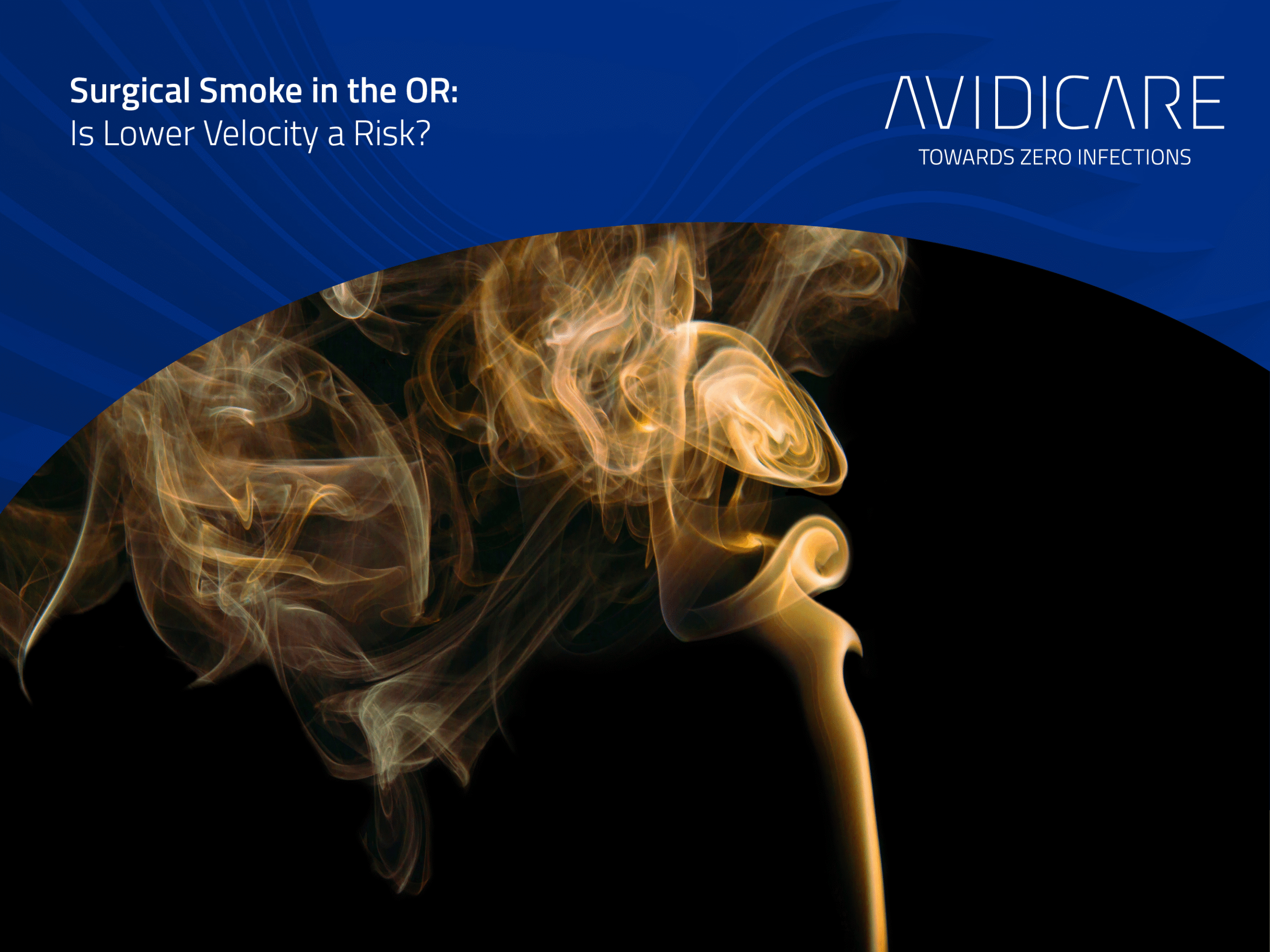
Surgical Smoke in the OR: Is Lower Velocity a Risk?
Series Introduction
This article is part of a series that unpacks common misconceptions about Temperature-controlled Airflow (TcAF) in the context of operating room ventilation. Aimed at hospital architects and technical consultants, the series provides evidence-based comparisons between TcAF and traditional Unidirectional Airflow (UDAF) systems. Each post focuses on a specific claim to support informed decisions in the design of infection-sensitive environments.
Claim: “TcAF cannot handle surgical smoke properly due to lower velocity and lower total air volume.”
Reality: TcAF removes surgical smoke in a controlled and effective manner. High-velocity airflow, such as that used in UDAF systems, may actually interfere with local smoke evacuation.

Context and Analysis
Surgical smoke is a byproduct of tissue cauterization and must be managed to maintain visibility and reduce exposure to harmful particulates. UDAF systems are often assumed to clear smoke more quickly due to higher airflow speeds. However, this speed can also create unintended side effects.
High-velocity airflow can disrupt the trajectory of smoke, pushing it laterally or causing it to recirculate, particularly near the edges of the airflow field or around surgical equipment. These turbulent patterns may delay effective removal or interfere with localized smoke evacuators.
TcAF, on the other hand, creates a stable downward flow using cooled air that naturally sinks. This gravitational assistance enables smoke to move downward in a predictable path without being swept into turbulent recirculation zones. The lower, stable velocity is less likely to oppose the suction effect of local smoke evacuation devices, improving their efficiency.
Furthermore, TcAF reduces the risk of smoke stagnation under surgical lights and monitors, areas known to create wake zones in UDAF installations. The result is a more consistent and effective removal process without compromising visibility or airflow control.
Conclusion
High speed is not always better when it comes to surgical smoke. TcAF provides a controlled, gravity-assisted removal of airborne particles, avoiding the turbulence and interference that can accompany high-velocity systems.
This post is part of a series exploring widespread claims about TcAF. In the next entry, we’ll turn to the topic of energy consumption and challenge the idea that TcAF demands more power than UDAF systems.