
What Is Temperature-controlled Airflow (TcAF)?
Maintaining ultra-clean air in an operating room is essential for minimizing the risk of airborne infections of the wound during surgery. Over the years, different ventilation technologies have been developed to support this goal.
One innovative approach is Temperature-Controlled Airflow (TcAF).
While any kind of airflow is impacted by temperature, TcAF takes it as the driving force of the air distribution inside the room. It based on a simple but powerful principle: you can control air movement by carefully managing temperature differences. Instead of relying solely on high airflow volumes to push clean air toward the surgical field, TcAF uses slightly cooled air that naturally descends toward the floor.
Because cooler air is denser than warmer air, it moves downward in a stable and controlled manner. This creates a gentle flow of clean air that surrounds the surgical area and gradually displaces contaminated air away from critical zones.
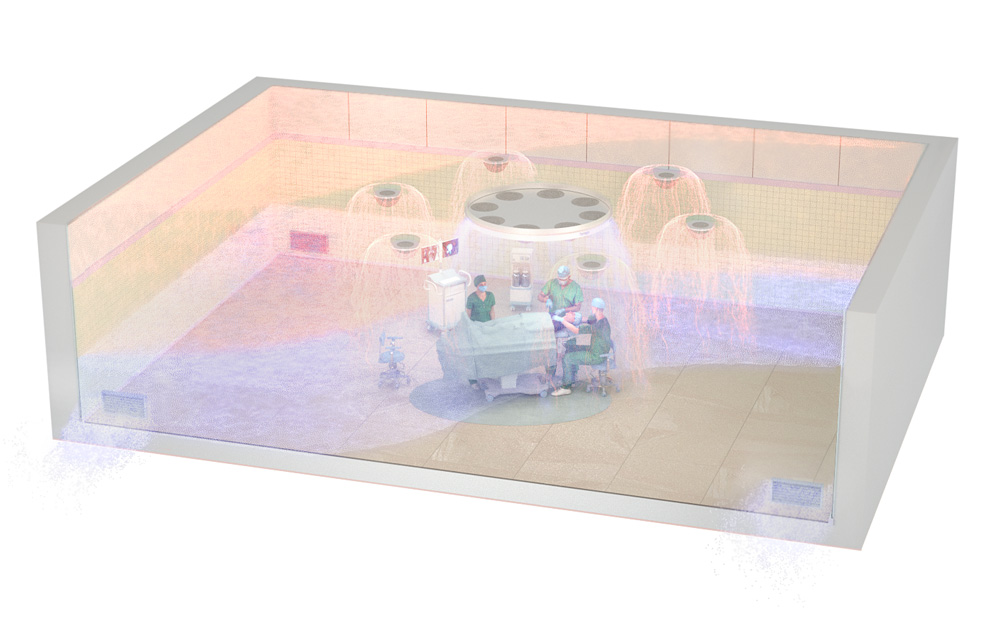
One advantage of this approach is that it can provide consistent air quality not only above the operating table but throughout the surgical space. In modern operating rooms, where staff moves frequently and equipment often extend beyond traditional sterile zones, this broader protection can be particularly valuable.

Another important benefit is energy efficiency. Traditional ventilation systems often require high airflow volumes, which can result in significant energy consumption. TcAF systems can achieve effective particle control with lower airflow rates, potentially reducing energy use while maintaining high air cleanliness standards. It even retains its fundamental working principle with lower airflow allowing for energy-saving modes during non-infection sensitive surgery.
For hospitals seeking to balance patient safety with sustainability goals, ventilation technologies based on temperature-controlled airflow offer an interesting alternative to conventional systems.
As surgical environments continue to evolve, innovations like TcAF highlight how engineering and medical science can work together to improve both safety and efficiency in the operating room.
Want to understand the engineering behind the next standard for operating room ventilation?
Learn more about airflow principles and how TcAF support ultra-clean surgical environments.