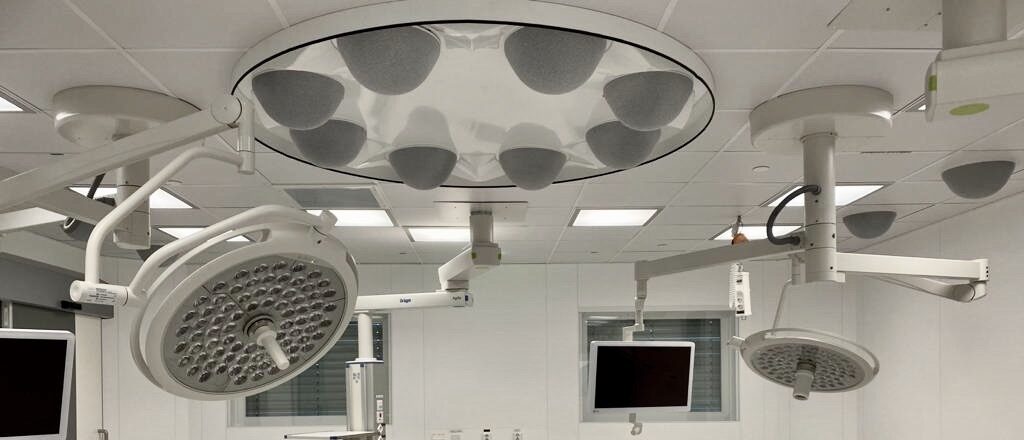
Why Opragon is a Natural Fit for Modular Operating Rooms
The opening of four new modular operating rooms at Uddevalla Hospital in Sweden marks an important step in restoring surgical capacity at the hospital. The operating rooms, equipped with Opragon ventilation system, have previously been in use at NÄL Hospital in Trollhättan and have now been relocated to Uddevalla.1
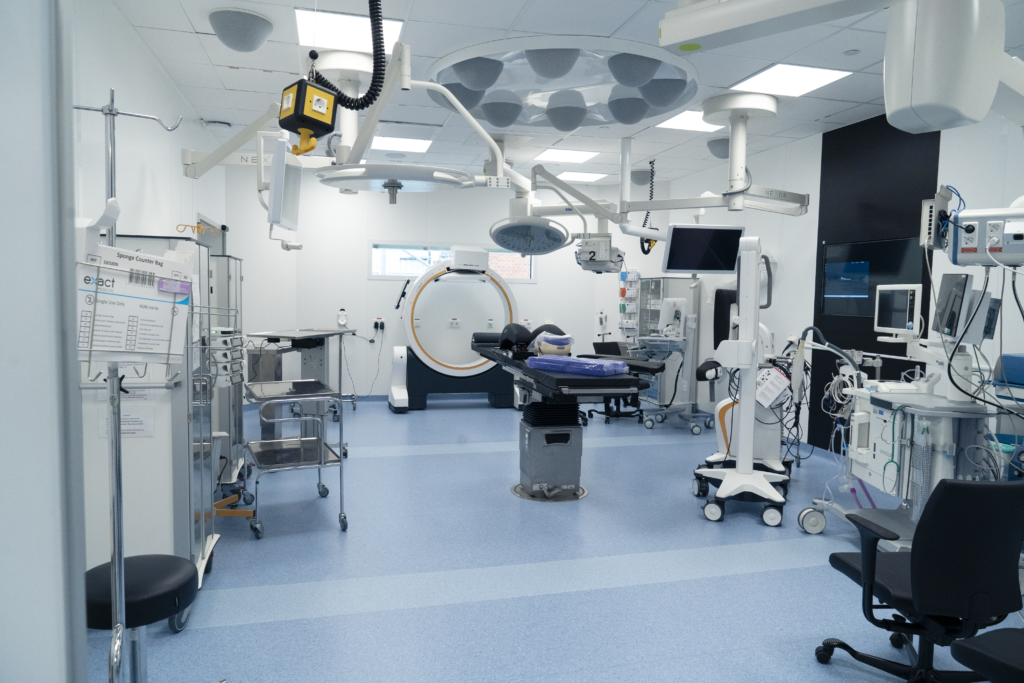
The project is a good example of how modular operating rooms can provide hospitals with greater flexibility, not only when additional capacity is needed quickly, but also when existing facilities need to be adapted, expanded or temporarily replaced.
Besides Uddevalla and Trollhättan, there are several examples of modular operating rooms equipped with Opragon. In 2020, two temporary operating rooms for advanced spinal and highly specialized orthopedic surgery were inaugurated at Skåne University Hospital in Malmö, Sweden.2 The rooms were housed in a purpose-built module connected to the existing hospital, providing additional surgical capacity while the hospital’s permanent facilities were being developed.
“These are state-of-the-art operating rooms for advanced spinal surgery and other highly specialized orthopedic surgery. It gives us better space for the equipment and personnel needed for this type of procedure and has an advanced ventilation system.”
– Henrik Ahlborg, Section Manager Orthopedics, Skåne University Hospital, Malmö
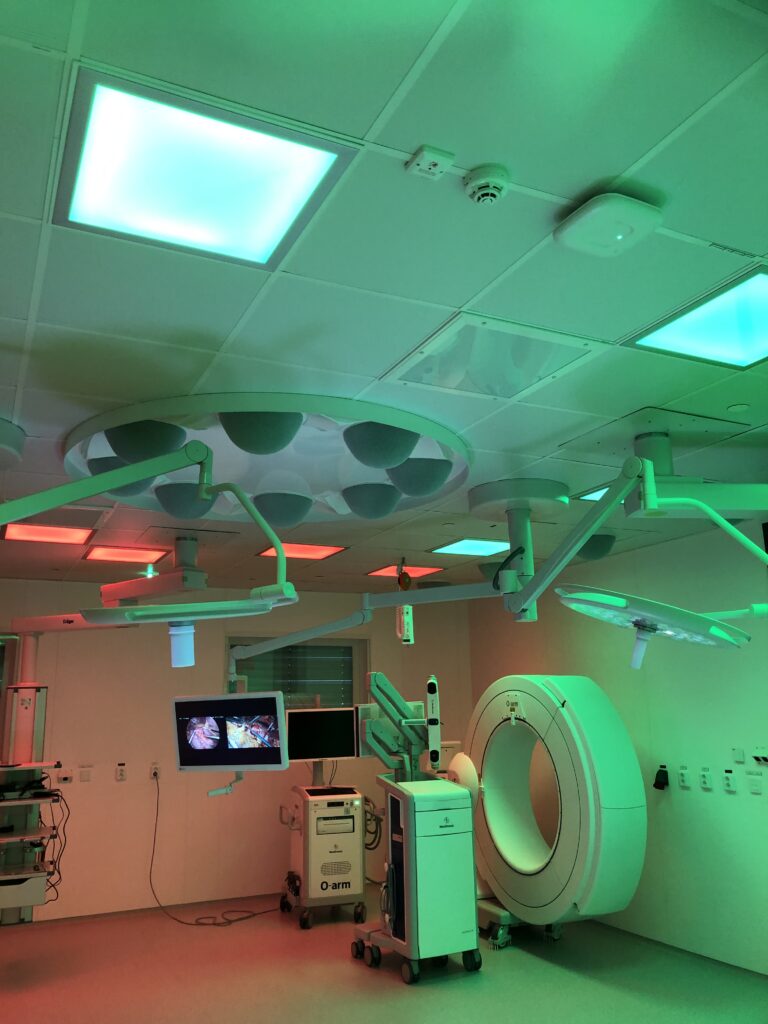

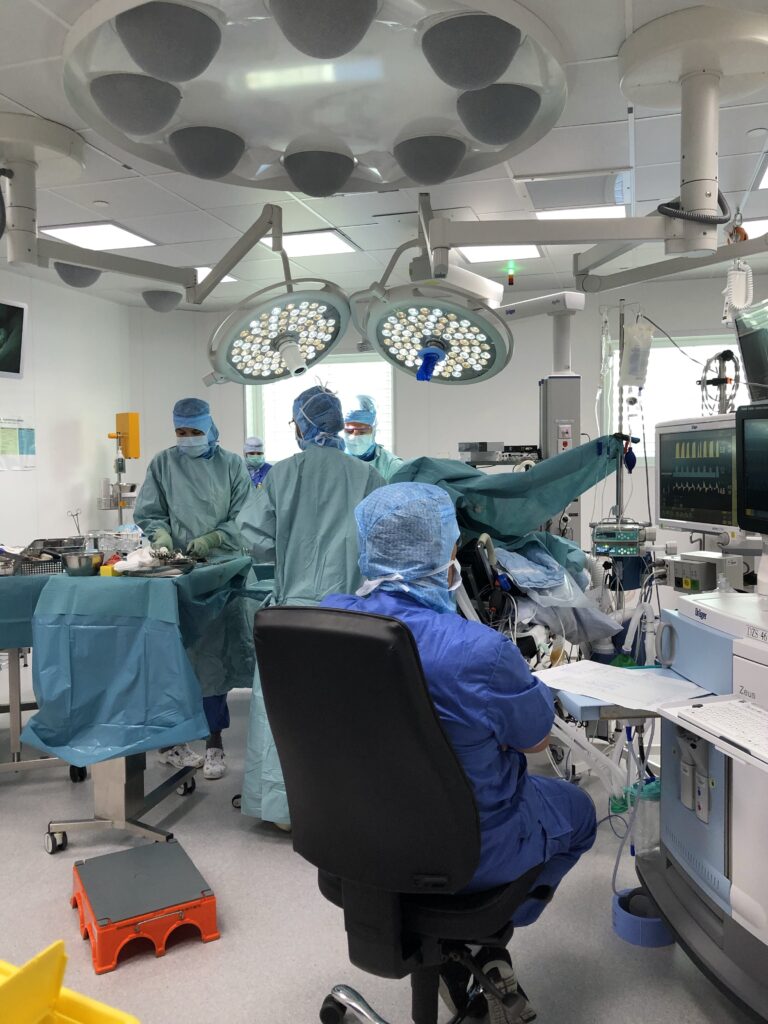
Module operating room in Malmö, Sweden
Making the most of limited space
Modular operating rooms are typically more compact than conventional hospital construction. Every meter and centimeter above the ceiling matters. This makes Opragon particularly well suited to modular environments. Its compact, low-profile design allows the ventilation system to be integrated into the room without requiring extensive ceiling space. But compactness is only part of the story.
When the whole room is ultra-clean
In a relatively small operating room, the distinction between a clean zone and the rest of the room becomes particularly important. Opragon’s Temperature-controlled AirFlow (TcAF) technology creates an ultra-clean environment throughout the operating room, rather than concentrating clean air only around the operating table. This gives the surgical team greater freedom to position equipment, instruments and staff throughout the room, an important advantage when space is limited.
High cleanliness with less airflow
Opragon also brings its established airflow efficiency to the modular environment. TcAF uses temperature differences and gravity to control the airflow, allowing Opragon to achieve ultra-clean conditions with significantly lower airflow volumes than conventional high-volume ventilation approaches. For a modular operating room, this can be especially valuable. Less air to move means less demand on the ventilation infrastructure, while also supporting lower energy consumption.
Modular does not have to mean compromise
The Uddevalla project demonstrates how modular operating rooms can be used to create high-quality surgical environments while giving hospitals the flexibility to adapt their infrastructure to changing needs.
“I am incredibly happy and proud that it has happened so quickly. Above all, I am happy that we can now help even more patients.”
– Jimmy Bjelkengren, Director of Anesthesia-Surgical-Intensive Care, Uddevalla Hospital.
Opragon’s compact design, flexible integration, whole-room cleanliness and efficient airflow make it a natural fit for modular operating rooms, whether they are designed to move again in the future or remain in the same location for many years.
When the operating room is built for flexibility, the ventilation should be too.
Reference: