
The Importance of Air Quality for Surgical Team Performance
When discussing operating room design, much of the focus is naturally placed on patient safety. However, the environment within the operating room also has a significant impact on the surgical team.
Surgeons, nurses, and anaesthesiologists spend many hours working in highly demanding conditions. Temperature, airflow, noise levels, and lighting all influence their ability to perform effectively.
Air quality is one of the key environmental factors.
Poorly controlled airflow can create drafts, uneven temperatures, or areas with stagnant air. These conditions can lead to discomfort, fatigue, and reduced concentration, factors that are far from ideal during complex surgical procedures.
Air quality also has a direct impact on the health of surgical staff. Surgical smoke, generated using electrosurgical and other energy-based devices, can contain potentially harmful substances and should be effectively controlled and removed from the operating room.
Anesthetic gases are another important consideration. Although modern anesthesia systems are designed to minimize exposure, waste anesthetic gases can still enter the operating room environment. Effective ventilation and appropriate extraction are therefore important for protecting staff and maintaining a healthy workplace.

Stable airflow patterns contribute to a more predictable and comfortable working environment. When ventilation systems are designed to minimize turbulence and maintain consistent air distribution, the operating room becomes a more controlled space.
This stability benefits both the patient and the surgical team.
In addition, modern operating rooms are filled with advanced equipment, monitors, imaging devices, and robotic systems. These technologies generate heat and influence airflow patterns in ways that were less common in earlier surgical environments.
Effective ventilation must therefore account for these complexities.
By designing airflow systems that support both infection prevention and staff comfort, hospitals can create operating environments that promote safety, efficiency, and optimal surgical performance.
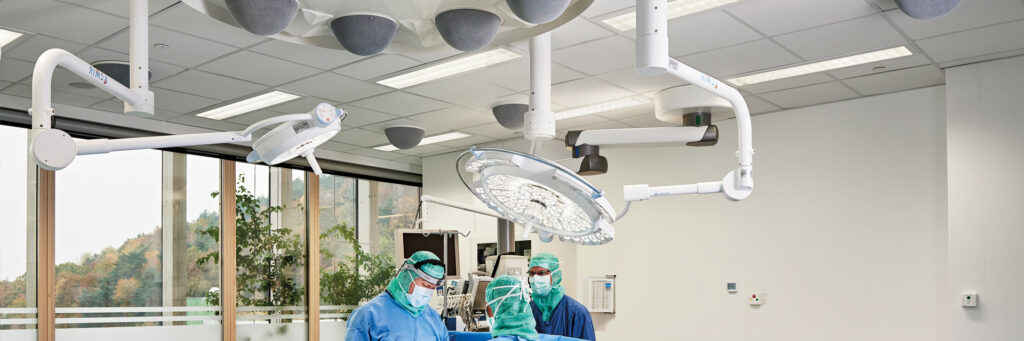
The operating room is not only a sterile environment, but also a workplace. Ensuring that it supports the people working within it is an essential part of delivering high-quality surgical care.
A safe operating room benefits both patients and staff.
Learn how ventilation design can contribute to better working environments for surgical teams.